
The Surprising Truth About Kitchen Safety: Why Your Dull Knife is More Dangerous Than a Sharp One
What’s the most dangerous tool in your kitchen? Logic might suggest it’s your sharpest chef’s knife. But the surprising truth, backed by chefs and safety experts, is that the most dangerous tool is actually your dullest knife.
It sounds counter-intuitive, but this single piece of knowledge can fundamentally change how you approach your cooking, making your kitchen a safer, more confident, and more enjoyable space. Understanding this paradox is the first step towards true mastery and safety in your daily prep.
The Simple Physics of a Dangerous Cut
The danger of a dull knife lies in simple physics.
A dull knife requires more pressure. To cut through the taut skin of a tomato or the tough surface of a pumpkin, you have to push down - hard. This downward force, combined with a blade that won't bite into the surface, is a recipe for disaster. The knife is far more likely to slip off the food and into your hand or fingers.
A sharp knife requires very little pressure. It glides through food with its own keenness. The edge bites into the food immediately, giving you precise control over every slice. It goes where you want it to go, making it a predictable and therefore much safer tool.
How a Sharpener Becomes Your Most Important Safety Device
When you reframe the problem this way, you realise that a high-quality knife sharpener isn't just a performance-enhancing tool; it's one of the most critical safety devices in your kitchen.
Regularly maintaining a sharp edge on your knives is the single best preventative measure you can take to avoid common kitchen accidents. It transforms your most-used tool from an unpredictable hazard into a reliable instrument.
Designing for Safety: What to Look for in a Sharpener
The sharpening process itself should also be safe. A great sharpener is engineered to protect you while you use it.
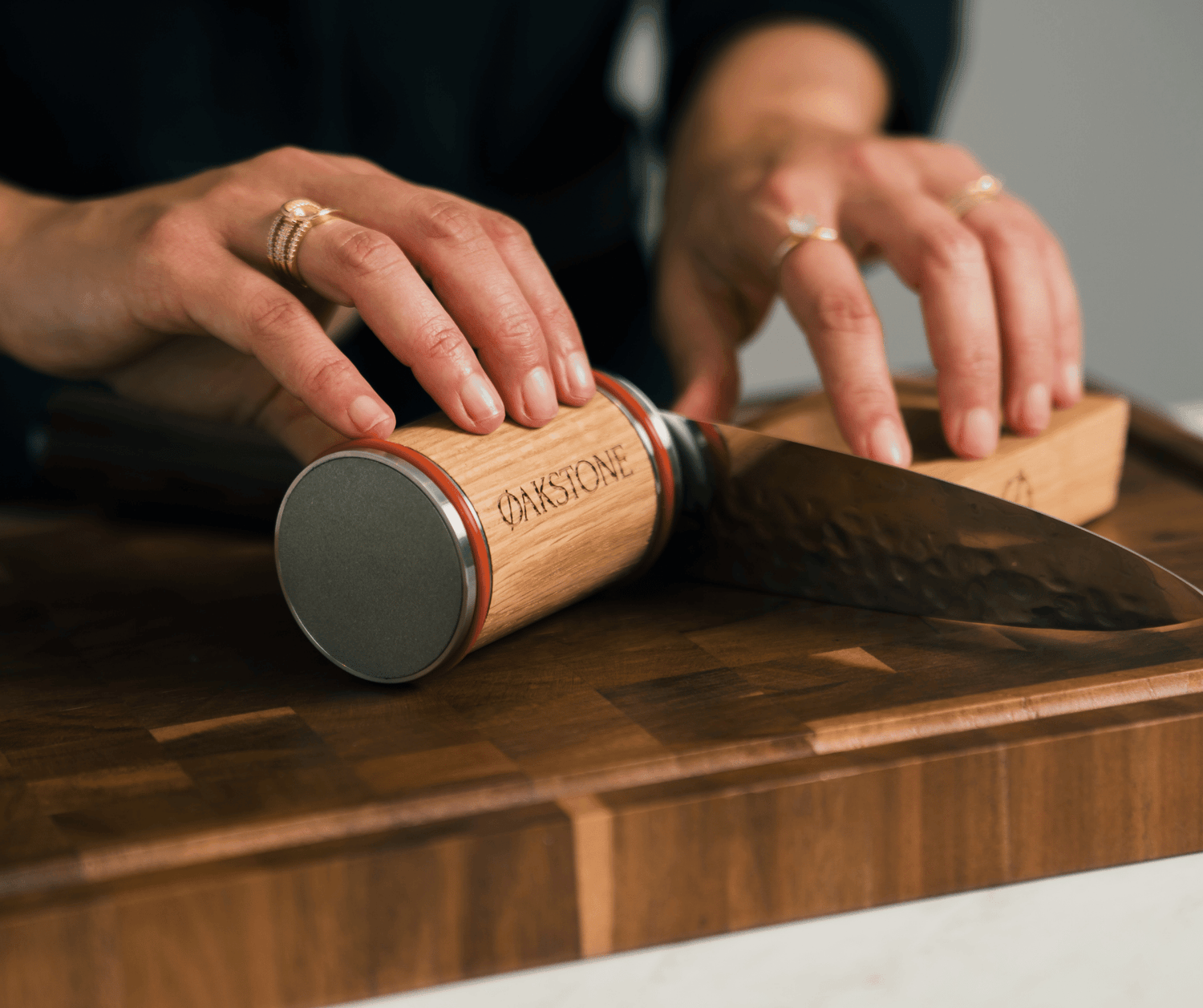
A Secure Grip on the Blade: The most critical safety feature is how the sharpener holds the knife. The Oakstone sharpener's unique triple-layered N50 magnet system creates an unwavering hold on the blade, preventing it from wobbling or slipping during the sharpening process.
A Controlled Sharpening Motion: The simple, repetitive rolling action is inherently safer than freehand methods like a whetstone, where your fingers can be close to the moving edge. It’s a controlled, predictable motion that keeps your hands safely out of the way.
A Stable, Non-Slip Base: A lightweight sharpener that slides around the counter is a hazard. Our solid oak base is heavy and stable, providing a secure foundation that stays put while you work.
When designed correctly, yes. A quality rolling sharpener with a strong magnetic base offers more control and keeps your hands further from the blade's edge than many other manual methods, making it one of the safest and most effective options for home cooks.
The best tip is to respect the blade, not fear it. Always cut on a stable surface (like a chopping board), use a proper "claw grip" with your guiding hand to protect your fingertips, and always cut away from your body. A sharp knife is a predictable tool; a dull one is not.
Safely storing knives protects both you and the blade's edge. A wooden knife block, an in-drawer knife holder, or a magnetic wall strip are all excellent, safe options. Avoid leaving them loose in a drawer where they can get damaged and present a risk.
While there are no official "sharpener certifications," every component of the Oakstone sharpener was engineered with user safety as a top priority - from the non-slip solid oak base to the powerful magnetic hold that secures the blade.
Did you like this article? Spread the word!


Ready to Earn Your Edge?
Get Sharpening Secrets & Members-Only Perks
The insights you need to make smarter kitchen decisions.
Ready to Earn Your Edge?
Get Sharpening Secrets & Members-Only Perks
Chef-Grade Tools
For intentional Home Cooks
Designed in Adelaide, South Australia


