
How to Choose the Right Knife Sharpener for Your Aussie Kitchen
Choosing a knife sharpener can feel overwhelming. Walk into any kitchenware store or browse online, and you're faced with a wall of options: traditional whetstones, honing steels, electric grinders, pull-through gadgets, and now, rolling sharpeners. Each one promises a perfect edge, but which is genuinely right for the Australian home cook?
The truth is, the "best" sharpener depends on your knives, your cooking style, and how much time and effort you want to invest. Getting it right can transform your meal prep from a frustrating chore into a moment of confident mastery.
Let's break down the options to help you make a smart choice for your kitchen.
Understanding the Main Types of Sharpeners
Whetstones: Considered the gold standard by many professional chefs for the incredibly fine edge they can produce. However, they require significant skill, practice, and patience to master the consistent angle needed for a good result. They can also be a bit messy.
Honing Steels: A vital tool for daily maintenance, but not a true sharpener. A honing steel simply realigns a blade's existing edge, it doesn't create a new one on a dull knife.
Pull-Through Sharpeners: These are often cheap and seem easy to use. However, they are frequently criticised for their aggressive, fixed carbides that can strip away too much metal and potentially damage the profile of a quality knife over time.
Electric Sharpeners: These offer speed and convenience. But, like pull-throughs, lower-end models can be too aggressive, and they lack the control and tactile satisfaction that many cooks enjoy.
Why a Quality Rolling Sharpener is the Perfect Hybrid
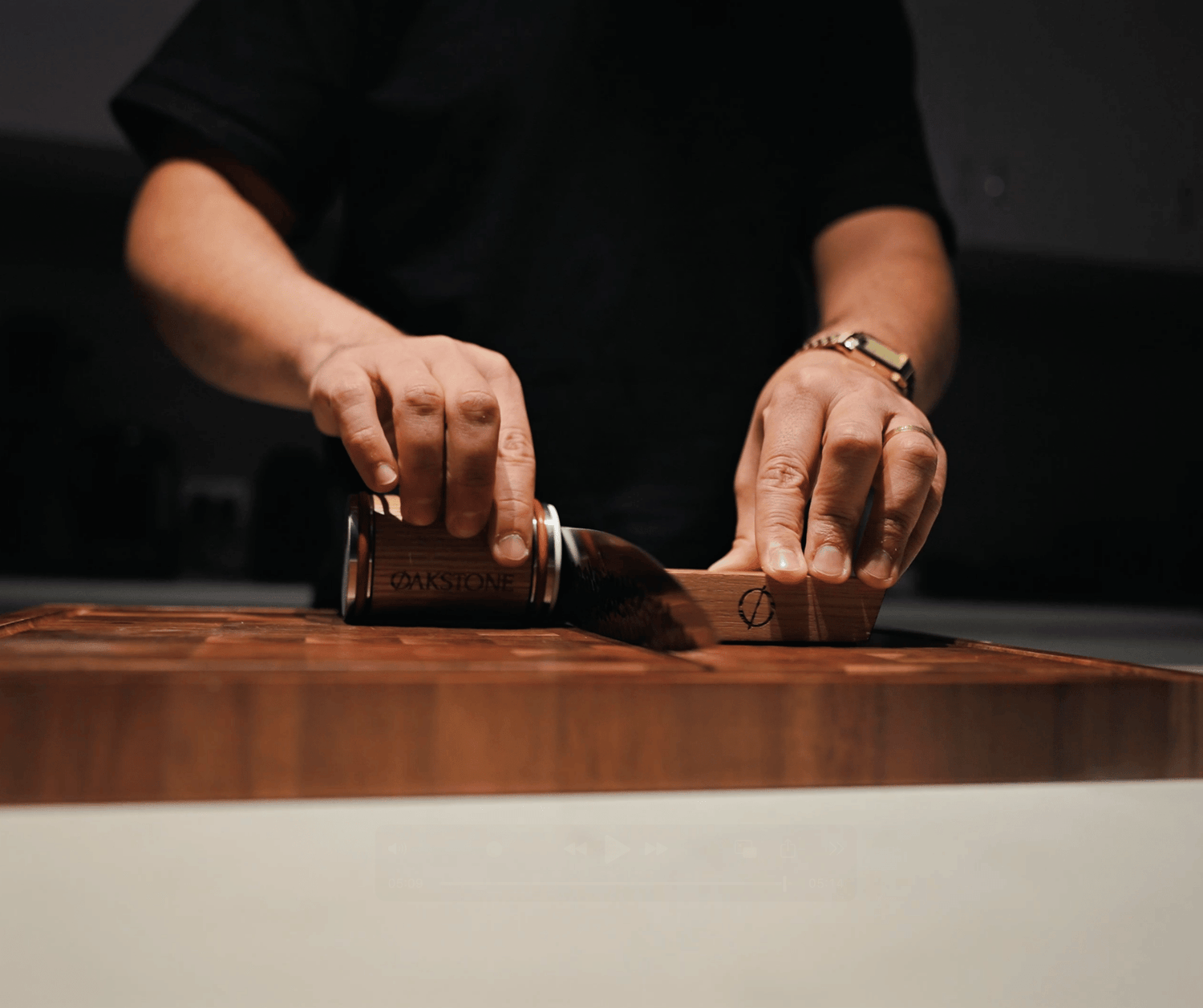
For the home cook who values professional results but is short on time, a rolling sharpener is the ideal solution. It combines the precision of a whetstone with the simplicity of a guided system.
The Oakstone sharpener, for instance, uses a magnetic base to lock your knife into the perfect 15° or 20° angle. This removes the single biggest challenge of sharpening: guesswork. The diamond and ceramic rolling discs then do the work of creating and refining the edge. It's a system that delivers a flawless, lasting edge while being gentle on your valuable knives.
Matching the Sharpener to Your Cooking Style
For the Passionate Foodie: You love mastering techniques and value the craft of cooking. You need a sharpener that delivers a professional-grade edge to match your ambition. The precision angles and diamond/ceramic system of a rolling sharpener will meet your high standards without the time commitment of a whetstone.
For the Busy Weeknight Cook: You need tools that are efficient, safe, and reliable. A rolling sharpener gives you a razor-sharp knife in minutes, making your weeknight prep faster and safer.
For the Design-Conscious Host: Your kitchen is the heart of your home, and your tools are part of its aesthetic. The Oakstone sharpener, crafted from solid oak and steel, is a "counter-worthy" statement of quality that you’ll be proud to display.
For most knives, 15° or 20° is ideal. Use 15° for finer, Japanese-style blades or when you want a razor-sharp edge for delicate slicing. Use 20° for more robust, all-purpose European-style knives, as this provides a more durable edge for heavy chopping.
A versatile sharpener like the Oakstone, with both 15° and 20° angles, can handle the vast majority of your straight-edged kitchen knives. However, these systems are not designed for serrated blades, scissors, or single-bevel knives.
This depends on how often you cook. For the average home cook, a true sharpening is only needed every few months. You should hone your knife much more regularly—even before each use - to maintain the edge between sharpenings.
Did you like this article? Spread the word!


Ready to Earn Your Edge?
Get Sharpening Secrets & Members-Only Perks
The insights you need to make smarter kitchen decisions.
Ready to Earn Your Edge?
Get Sharpening Secrets & Members-Only Perks
Chef-Grade Tools
For intentional Home Cooks
Designed in Adelaide, South Australia


